AEO vs SEO: Understanding the Difference and Identifying Your Optimal Search Strategy
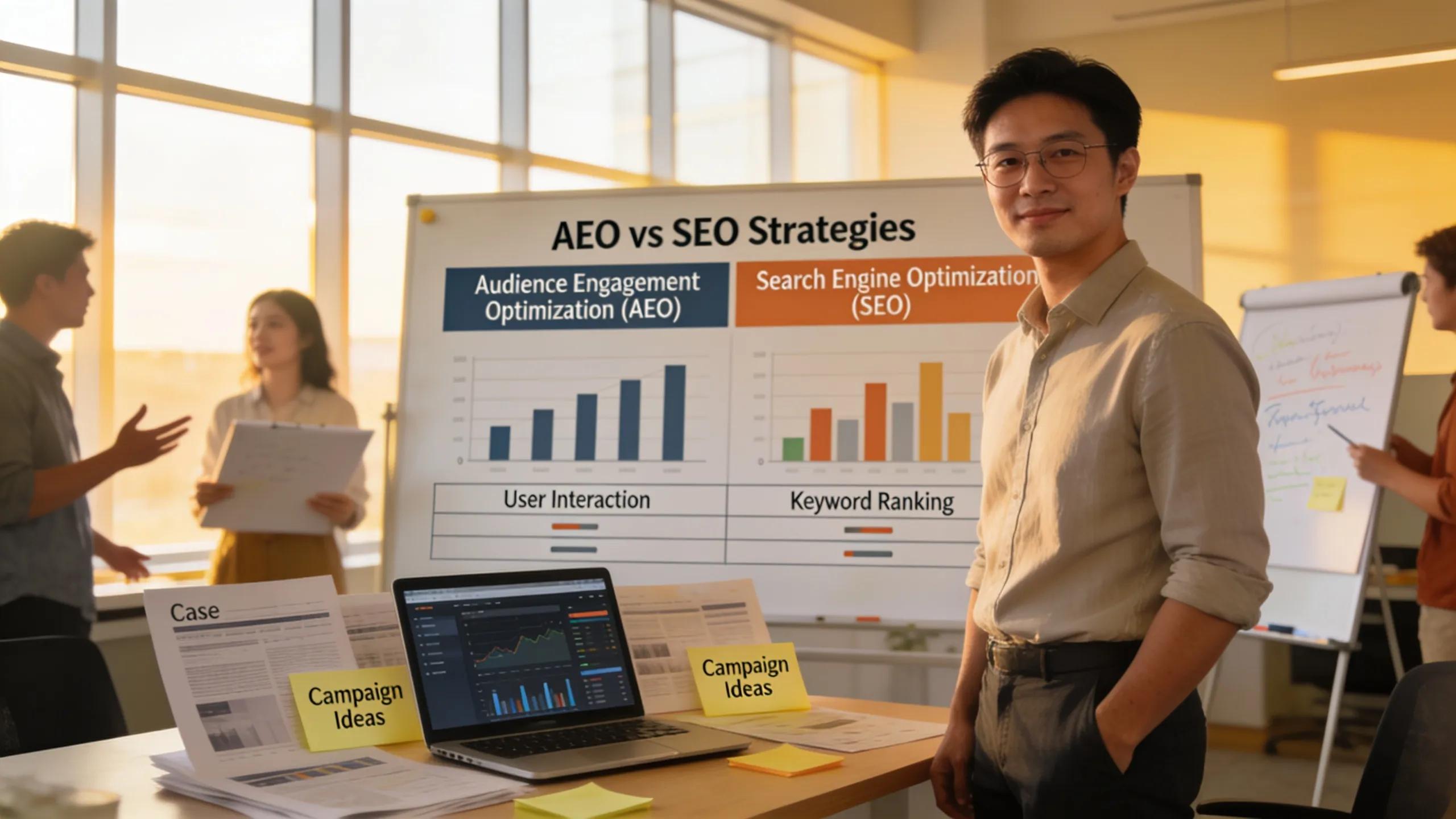
AEO (answer engine optimization) and SEO (search engine optimization) differ in what they win: SEO earns a ranked position and a click, while AEO earns the answer itself — the featured snippet, the voice response, the AI assistant's reply — often with no click at all. Most brands need both, layered. Here is where they diverge, where they overlap, and how to decide which deserves your next dollar.
Recent academic research underscores how this transition is fundamentally altering the way brands connect with their audiences in a digital-first world.
Focus:
At the heart of SEO and AEO lies their distinct focus areas that cater to different search platforms. SEO targets traditional search engines, aiming to optimize websites for organic visibility in search results. In contrast, AEO specifically aims to enhance a brand's presence within AI-driven platforms like voice assistants and answer engines. This distinction is crucial as it dictates the approach and tools that marketers should utilize when crafting their strategies.
Methodology:
The methodologies underpinning SEO and AEO showcase their unique characteristics and implementation practices. SEO typically involves keyword targeting, link building, and content creation based on traditional algorithms. Meanwhile, AEO emphasizes the use of structured data and entity optimization, allowing brands to communicate effectively with AI systems. By utilizing these methodologies properly, businesses can maximize their online presence in both search and answer engine contexts.
Outcome:
The expected outcomes from implementing SEO and AEO strategies can vary significantly. SEO is primarily designed to drive website traffic by improving search engine rankings, while AEO focuses on ensuring that a brand is cited in AI-generated results. This can lead to improved engagement through platforms that provide instant answers to users' queries. SparkToro's 2024 analysis found that 58.5% of Google searches end without a click. Understanding these outcomes is essential for brands as they formulate their strategies, ensuring alignment with their business objectives and audience needs.
As AI integration progresses, the way we measure success must adapt to account for the move away from traditional click-based metrics.
Optimal Strategy for Marketing Goals:
Choosing the right strategy between SEO and AEO depends on your specific marketing goals. For brands targeting high-intent searches, AEO may prove to be the preferable option due to its focus on visibility in AI-driven environments. However, the best approach often involves integrating both strategies to enhance overall online performance. By blending SEO with AEO techniques, businesses can foster greater visibility across traditional and modern search platforms alike. PulsePeak specializes in enhancing businesses' digital visibility by integrating advanced SEO techniques with AI-driven optimization platforms.
What Are the Core Differences Between Answer Engine Optimization and Search Engine Optimization?
To clearly distinguish between AEO and SEO, it's crucial to understand their core principles:
- Definitions: SEO is defined by its focus on search engines for driving organic traffic, while AEO centers on optimizing content for AI-driven platforms and voice search technologies.
- Purpose: SEO's primary purpose is to improve a website's ranking in traditional search results, whereas AEO aims to provide accurate information for user queries delivered through AI interfaces.
- Key Metrics: The metrics used to measure success can also differ significantly; SEO often relies on impressions, clicks, and keyword rankings, while AEO may emphasize voice search visibility, direct answers, and engagement metrics.
This understanding of their core differences helps businesses tailor their strategies effectively.
How Does AEO Leverage AI and Voice Search to Enhance Visibility?
AEO leverages artificial intelligence to maximize visibility in the growing landscape of voice search technology. By optimizing content with structured data and focusing on user intent, brands can secure their place as authoritative sources of information in AI-driven search environments. This approach not only enhances clarity but also aligns with consumers' increasing reliance on voice-activated devices, ensuring brands remain relevant in modern search contexts.
In What Ways Does SEO Focus on Keyword Ranking and Traditional Search Algorithms?
SEO places a heavy emphasis on keyword ranking through traditional search algorithms. The process usually involves extensive keyword research to identify popular search terms, followed by the creation of high-quality content that satisfies user queries. This methodology helps improve a website's ranking, driving organic traffic from potential customers actively seeking information related to those keywords.
Which Businesses Benefit Most from Answer Engine Optimization Techniques Versus SEO Strategies?
Different types of businesses will find varying degrees of success with AEO and SEO strategies. Companies that primarily focus on AI-driven services or offer quick answers to common inquiries will benefit greatly from implementing AEO techniques. Conversely, businesses with traditional online stores or those reliant on generating traffic through search engines may find that a strong SEO approach better meets their needs. Understanding these distinctions allows organizations to tailor their digital marketing strategies effectively.
How to Assess Business Goals for AI-Driven Search Visibility Improvement?
When assessing business goals, it is essential to evaluate current search visibility comprehensively. Organizations should identify their target audience's behavior and preferences while setting specific goals aligned with AEO and SEO strategies. Consider factors like search trends, market demands, and the competitive landscape to inform decision-making processes as your business engages with AI and traditional search platforms.
What Is the Impact of Voice Search Trends on SEO Effectiveness?
Voice search trends have reshaped the SEO landscape by introducing changes in how users search for information. These shifts result in increasingly more zero-click searches, where users obtain answers without visiting a website. This necessitates a reevaluation of traditional SEO strategies, leading brands to adapt their content to provide quick, concise answers suitable for voice-activated platforms while still maintaining effective traditional search optimization.
How Can Enterprises Integrate SEO and AEO to Maximize AI Platform Performance?
Integrating SEO and AEO can significantly enhance performance across different digital platforms. By combining traditional optimization practices with AI-specific strategies, enterprises can create a cohesive approach that captures traffic from both avenues. This includes developing content that ranks well in search results while ensuring that the same content is structured to provide direct answers in AI interfaces. Achieving this balance can lead to comprehensive visibility and a competitive edge in the digital marketplace.
What Semantic SEO Optimization Techniques Complement Answer Engine Optimization?
To achieve effective integration of SEO and AEO, businesses may rely on several semantic SEO techniques. These include the use of structured data, canonical tags, and semantic schema markup. By incorporating these elements into their web content, organizations can enhance search engine comprehension and improve their chances of being featured in AI-driven answers and recommendations.
As search engines evolve into generative entities, experts have proposed new frameworks to ensure your content remains discoverable in this new era of AI-driven synthesis.
| Technique | Description | Benefit |
|---|---|---|
| Structured Data | Adds context to content using a specific vocabulary | Improves visibility in search results |
| Entity Optimization | Focuses on relationships between topics and subtopics | Enhances AI understanding of content |
| Schema Markup | Provides data about a webpage's content | Increases chances of rich snippets |
This table illustrates how strategic semantic SEO practices create valuable opportunities for optimizing content for both traditional and AI-driven searches.
Which Metrics Best Measure Combined SEO and AEO ROI?
To evaluate the success of integrated SEO and AEO efforts, marketers should consider relevant metrics tailored to both strategies. Key performance indicators may include traffic sources, conversion rates, and visibility in AI-generated results. Moreover, measuring the impact of content optimization through engagement metrics such as click-through rates can yield valuable insights regarding the effectiveness of implemented strategies.
| Metric | Description | Value |
|---|---|---|
| AI Visibility Score | Measures how frequently a brand appears in AI-generated answers | Higher scores indicate stronger AEO performance |
| Organic Traffic Growth | Tracks increases in website visitors from search engines | Key indicator of SEO success |
| Engagement Rate | Measures user interactions with content | High rates reflect effective communication |
Collectively, these metrics provide a holistic view of the combined ROI from SEO and AEO initiatives, underlining the importance of an integrated approach.
What Future Trends in AI Search Technology Should Influence Your SEO and AEO Decisions?
The landscape of AI search technology continues to evolve, and several trends are emerging that marketers should consider when planning their SEO and AEO efforts. As AI algorithms become more sophisticated, the focus on user intent and contextual relevance will likely intensify. Therefore, businesses must remain agile, adapting their strategies to maintain competitiveness in this shifting environment.
How Will Emerging AI Algorithms Affect Answer Engine and Search Engine Optimization?
Emerging AI algorithms are set to reshape both AEO and SEO practices significantly. As search engines and answer engines evolve to prioritize user experience and relevance, marketers must stay informed and adjust their optimization strategies accordingly to maintain their visibility. Understanding these algorithm changes can greatly influence the effectiveness of both AEO and SEO efforts.
What Actions Should Businesses Take to Maintain Competitive Search Visibility through 2026 and Beyond?
To sustain competitive search visibility in today's rapidly changing landscape, businesses must adopt a proactive approach. Focus on continuous learning, adapting strategies to emerging trends, and optimizing content for both AI-driven and traditional search environments. Maintaining a strong presence across various platforms will be critical as market dynamics continue to evolve, especially with advancements in AI and evolving consumer behaviors.
By embracing an integrated SEO and AEO strategy, staying responsive to technological advances, and aligning closely with user intent, businesses can secure lasting visibility and success in the dynamic digital marketplace ahead. PulsePeak's methodology layers AEO and SEO deliberately rather than treating them as rivals, and our AI visibility services cover both sides of that equation.